
Opening Hours – 7.45am – 5.30pm
Telephone – 01772 860834
Email – enquiries@broughtonpreschool.co.uk
‘From tiny acorns, mighty oak trees grow’
‘Outstanding in all areas’ Ofsted 2020
The New Foundation Stage
The provision for children’s development and learning is guided by The Revised Early Years Foundation Stage (EYFS 2021), which came into practice in September 2021. There are 7 areas of learning and development that shape the educational programme in our setting. The 3 prime areas are very crucial for igniting curiosity and excitement for learning. These are:
- Communication and Language
- Physical Development
- Personal, Social and Emotional Development
For more information see www.foundationyears.org.uk
Key Person
Our key person system gives each member of staff particular responsibility for just a few children. Each child is allocated a member of staff when they begin pre-school. This staff member is responsible for settling your child into pre-school, record keeping, observing and ensuring that your child’s interests and developmental needs are being met. Should your child’s key person not be in pre-school on a particular day there is a nominated deputy who takes responsibility for your child’s well-being. These nominated staff are represented at the front of your child’s learning journey book by photographs. Please do ask your child’s key person if you are unsure or have any questions on any matter pertaining to your child’s progress, well being and development.
Learning and Developing through play
Play helps young children to learn and develop through doing and talking, which research has shown to be the means by which young children learn to think. Our setting uses the practice guidance Early Years Foundation Stage to plan and provide a range of play activities, which help children to make progress in each of the areas of learning and development. In some of these activities children decide how they will use the activity and, in others, an adult takes the lead in helping the children to take part in the activity. In all activities information from the practice guidance to the Early Years Foundation Stage has been used to decide what equipment to provide and how to provide it.
Assessment
We assess how your children are learning and developing by observing them frequently and maintaining their learning journey book. Through observation, photographs and working in partnership with you, the parents/carers, we can document their progress and see where this may be leading them. We believe that parents know their children best and we ask them to contribute to assessment by sharing information about what their children like to do at home and how they as parents are supporting development.
Assessments and summaries of the children’s achievements are made periodically. These form part of the children’s learning journey. Assessments are also made at key times such as when a child moves into a different group or when they go on to school.
‘All children make the very best progress. They are active, eager and independent learners. Children acquire the skills in all areas of learning and development. They are extremely well prepared for their next stages in learning and for school.’
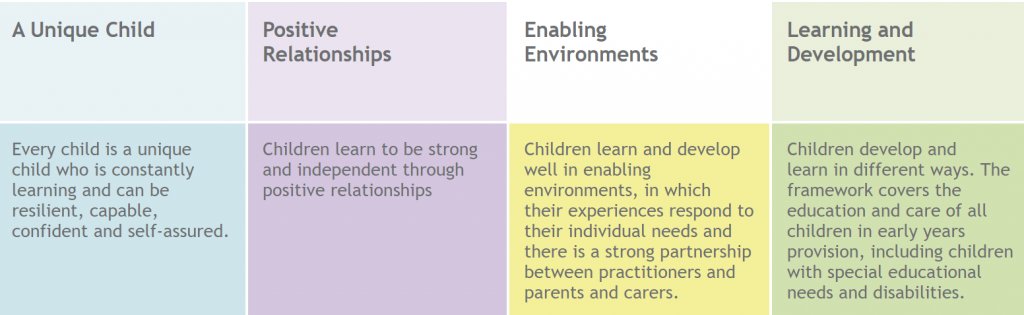
To view our curriculum click on either Word or Acrobat versions below:
–> Curriculum (Word format)
–> Curriculum (Acrobat format)
Broughton Pre School were one of the first four settings in Lancashire to achieve the Lancashire Quality Award. This demonstrates our exceptionally high standard of provision, care and education.
We were pleased to be awarded the Learning Excellence Good Practice Award in January 2014 for our study ‘How the role of the practitioner can raise the level of achievement for boys’ in the early years’. The Learning Excellence Award is about sharing good practice between educational establishments.
 Ofsted
We were Ofsted inspected in February 2020 and at the inspection we received an OUTSTANDING in all areas.
Click here for further details of our Ofsted report log